
From how to make Kim Su-mi's winter side dish 'Bomdong Geotjeori' to how to choose and prepare it! Here it is~
Kim Su-mi’s bomdong geotjeori recipe, with ingredients and tips for choosing and preparing this spring vegetable.
Bomdong (open-leaf napa cabbage) is a common side dish found on many dining tables. It is very simple to prepare as a seasoned salad (muchim). True to its name, bomdong is the vegetable that announces the arrival of spring first. With its appearance resembling small cabbages, its crunchy texture makes it perfect for fresh salads (geotjeori) or seasoned vegetables (namul). Let's look into a representative recipe for bomdong geotjeori.
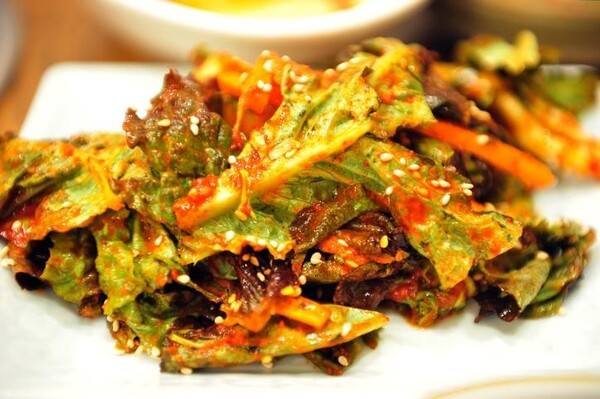
Sumi's Kitchen: How to make Kim Su-mi's 'Bomdong Geotjeori'
The ingredients for Kim Su-mi's bomdong geotjeori recipe from 'Sumi's Kitchen' are: △ bomdong (open-leaf napa cabbage) △ garlic chives △ jjokpa green onions △ 3 tbsp anchovy fish sauce △ 1 tbsp yukjeot (a type of salted fermented shrimp) △ 1 tbsp minced garlic △ 1/2 tbsp minced ginger △ 6 tbsp red chili powder △ sesame seeds.
1. Make the seasoning sauce by mixing anchovy fish sauce, yukjeot (a type of salted fermented shrimp), minced garlic, minced ginger, and red chili powder.
2. Cut the prepared bomdong, jjokpa green onions, and garlic chives into three equal parts and mix them together.
3. Sprinkle generously with sesame seeds to make it look appetizing, and it is complete.
How to choose bomdong
To choose good bomdong, first, look for ones with fewer cotyledons and a light green color. Choose leaves that are clean without spots, where the white parts are short and distinct. The inner leaves should be a vivid yellow, and a suitable size is one that can be cupped by an adult man's two hands.
How to prepare bomdong
To prepare bomdong, first, gather the spread leaves and cut off the base. Then, peel off the leaves one by one, wash them 5 to 6 times in running water, and remove the moisture. When making bomdong geotjeori, it is recommended not to salt the leaves. This is so you can enjoy the crunchy texture by seasoning them immediately. However, when using them for seasoned vegetables (namul) or soup, it is important to rinse them in lightly salted water so the seasoning absorbs well.
[FamTimes=Reporter Yoon Ju-hyeon]
![[Simple Dinner Recommendation] Chewy Braised Lotus Root and Sumi's Side Dishes Braised Burdock Root Recipes](https://img.famtimes.co.kr/famtimes/2026/09/193a43c2-fc47-483e-9f7b-71b9ef96730c-f31634e9-thumb.webp)

Comments 0