
Can Wolves, Dogs' Relatives, Become Pets Too?
Wolves can bond with humans and show social intelligence, but their independent, instinctive nature makes keeping them as pets too dangerous.
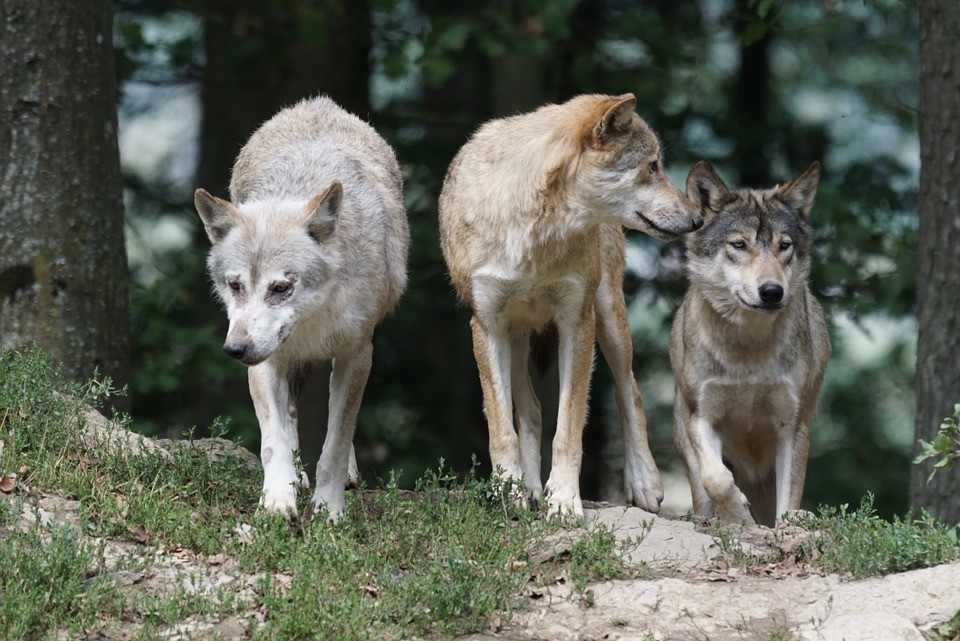
[FamTimes reporter Jennylyn Gianan] Dogs are indisputably descendants of wolves. Although the history of dogs dates back about 15,000 years, they have retained a wolf-like appearance to this day. What do scientists think about this subject?
According to a recent study, wolves, like dogs, also have high social intelligence. However, these findings do not guarantee that wolves can be kept as pets.
Wolf pups can show strong affection toward humans, just like puppies. But as they grow, their previously hidden independence begins to emerge.
Dr. Dorothy of Eötvös Loránd University in Hungary has studied wolves' distinctive behavior toward their caregivers, familiar faces, and strangers.
Dr. Dorothy says dogs become attached to humans because of their dependence, while wolves express affection in an independent way.
Dr. Dorothy's research team conducted a study involving eight wolves and nine wolf pups.
The eight wolves appeared to develop greater sociability through encounters with caregivers, familiar faces, strangers, and fellow wolves. In contrast, the young wolf pups, aged 12 to 24 months, were placed in the care of the same people, whose clothing and scent remained consistent.
The study produced surprising findings about the level of affection shown by wolves.
Some wolves were found to feel a strong affinity toward humans, much like dogs, despite their instinctive aggression.
However, wolves belong in the wild. They can develop affection and sociability, but their latent nature does not change.
Dr. Dorothy argued that wolves can live safely and independently in the wild, and that keeping them as pets is far too dangerous.
Jennylyn Gianan fam1@pcss.co.kr
FAM타임스 명의로 발행된 기사를 모아 제공하는 매체 공용 저자 페이지입니다.


Comments 0