
Do Cats’ Facial Expressions Determine Whether They Get Adopted?
Cats’ facial expressions did not affect adoption time, but cats that rubbed against objects more often were adopted 30% faster.
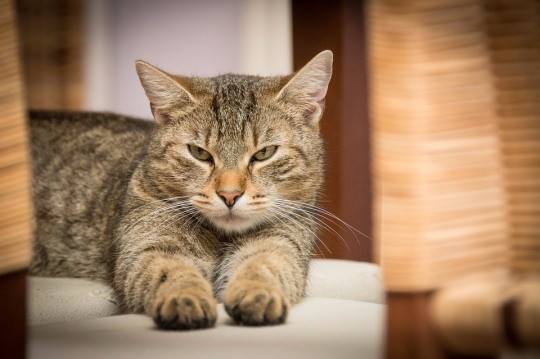
[Fam Times reporter Park Ju-hye] According to a study conducted in 2013, puppies’ facial expressions may be a key factor in improving their chances of adoption.
Psychologists said a dog that raised its eyebrows 20 times while facing a human would be adopted more quickly than one that did so five times.
Even an older dog can make itself more appealing to people by raising its eyebrows, which gives it a puppy-like expression.
The same researchers wondered whether this also applied to cats.
Based on anatomy and muscle structure, they developed a cat facial-expression coding system that simulates the full range of feline facial expressions.
It is the same system used for chimpanzees, humans, dogs, orangutans, gibbons, and macaques.
Data based on the expressions of 106 cats at three different animal shelters in the United Kingdom showed that cats display little variation in facial expression compared with dogs.
Only seven ear movements, 15 facial expressions, and six movements involving the eyelids, pupils, lips, and tongue were recorded.
The study therefore found no statistical correlation between cats’ facial expressions and the length of time it took them to be adopted.
However, in a paper recently published in the journal Applied Animal Behaviour Science, the researchers reported that cats that rubbed their bodies more frequently against furniture, toys, and other objects were adopted 30% faster than cats that did not.
The researchers concluded that, unlike dogs, cats do not need to appeal to people through facial expressions in order to be adopted.
Reporter Park Ju-hye, fam1@pcss.co.kr
FAM타임스 명의로 발행된 기사를 모아 제공하는 매체 공용 저자 페이지입니다.
Comments 0