
The reason why mixing frying powder and potato starch makes Dakgangjeong crispy even when cold
A video from the YouTube channel 'Young-Ja's Kitchen' reveals a recipe for Dakgangjeong that remains crispy on the outside and chewy on the inside even…
Instead of Galbijjim or Jeon, which frequently appear as holiday foods, Dakgangjeong is gaining attention as a special menu that the whole family can enjoy. According to a video from the YouTube channel 'Young-Ja's Kitchen', a secret to making Dakgangjeong that is more cost-effective than store-bought versions and "not soggy even when cold, with a crispy exterior and chewy interior" has been revealed.
The ratio of frying powder and potato starch and the double-frying process
The key to determining the crispy texture of Dakgangjeong lies in the composition of the batter and the frying method. In the video, based on approximately 650g of prepared chicken, a batter is made by mixing 5T (tablespoons) of frying powder and 2T of potato starch. At this time, the consistency of the batter is adjusted using the liquid consisting of the milk and ginger syrup in which the chicken was marinated. After adding the dry powder first, the liquid is poured in, explaining, "You can add or subtract according to the moisture content."
Temperature management is important during the frying process. The meat should be added when the oil temperature is between 170–180 degrees Celsius, and after the meat is added, it is good to maintain around 160 degrees Celsius. Since adding a large amount at once can cause the oil temperature to drop sharply and reduce crispiness, the meat should be added one by one to maintain the temperature. After taking out the golden-brown cooked chicken and letting it cool slightly, if you fry it "one more time" at high heat at the very end, you can achieve a texture that maintains its crispiness even when cold.
Tossing in garlic-scented sauce to complete the chewy texture
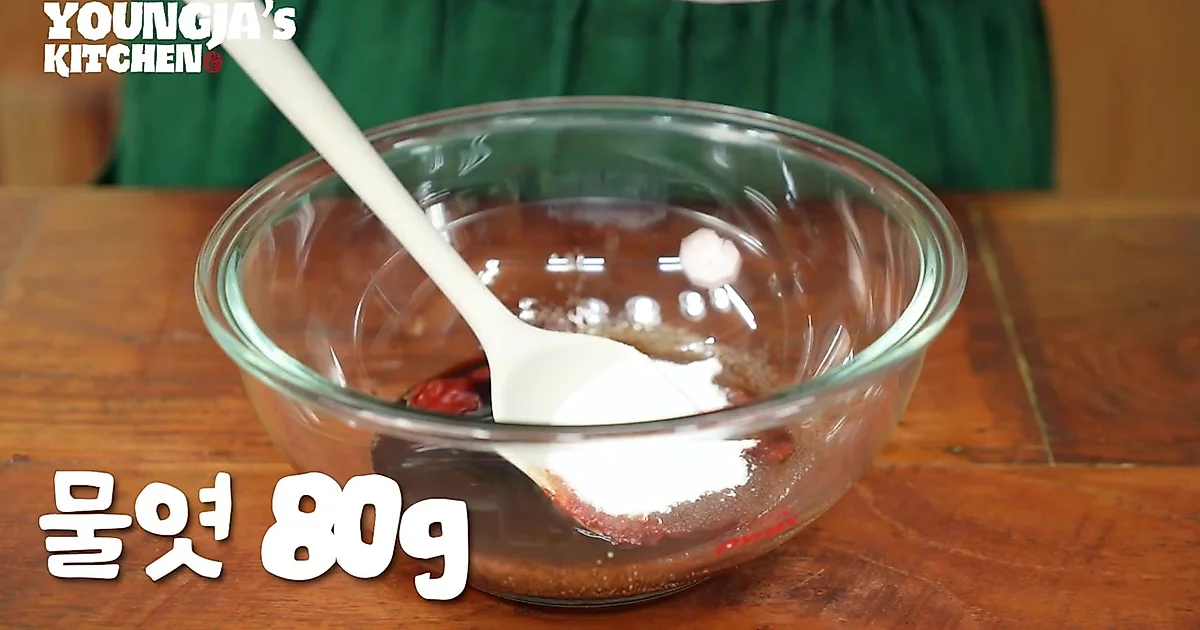
The seasoning sauce is made by mixing 40g of soy sauce, 80g of ketchup, 60g of gochujang, 80g of starch syrup, and 30g of sugar. Before making the sauce, there is a process of adding 1T of minced garlic to cooking oil in a pan to sufficiently bring out the garlic aroma. Once the garlic aroma rises sufficiently, the prepared sauce is poured in, and the sauce's consistency is adjusted by boiling it until the bubbles formed during boiling subside.
When the sauce reaches the appropriate consistency, reduce the heat to medium, add the fried chicken, and toss quickly. In the video, the recipe guides, "Simmer it so that the seasoning sticks to the batter in a chewy way." To maximize the chewy texture, the finished Dakgangjeong should not be piled on top of each other but spread out to cool slightly. Finally, finish by sprinkling sesame seeds, peanut powder, or pine nut powder.
Comments 0