
Why Keeping Distance from Your Cat is Evidence of 'Trust' Rather Than Indifference
The article explains that a cat's tendency to maintain a certain distance from its owner is not a sign of indifference…

Among guardians raising cats, many worry because they are unsure if their cat likes them. Seeing a cat that ignores them even when their name is called, or simply stays in the same space without expressing much affection, can lead to feelings of disappointment, making one wonder, "Does my cat just see me as a housemate?" However, a cat peacefully coexisting while maintaining a certain distance from its guardian is not a sign of indifference, but rather a unique way of expressing affection based on mature trust.
The meaning of 'roommate-type' behavior that observes while maintaining a certain distance
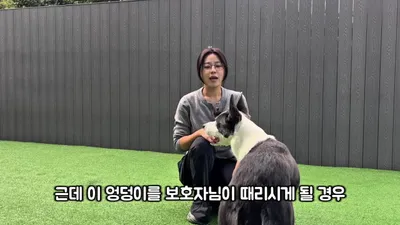
According to a video from Yoon Saem's My Pet Counseling Center-Pet Clinic, the behavior where a cat stays in the same space as its guardian but always tries to maintain a constant distance of about 1 to 2 meters psychologically carries the meaning, "I want to be with you, but I also need my personal space." This is not a rejection of the guardian, but an indicator that the cat feels comfortable with the guardian's presence. This is because cats never stay long next to an object of anxiety.
Furthermore, the behavior of simply staring quietly when a guardian returns home, rather than running up excitedly or meowing, is also a simple greeting response. This is a form of social etiquette to confirm each other's existence as members of a group. Watching the guardian's activities from a distance without directly intervening is also an expression of a sense of shared space, indicating curiosity without the desire to disturb. The behavior of meowing only once briefly even when their name is called is a minimal information exchange meaning "I understood," and is a unique communication method of cats, who are low-stimulation communicators.
The social etiquette of cats sharing scents and matching life rhythms
The behavior of a cat lying on a guardian's clothes, belongings, or on top of a bag is a process of approving that "we are companions sharing the same space" by rubbing its own scent onto them. Sharing scents within a territory means recognizing each other as members of a group. This characteristic also appears in sleeping habits. Even when using the same bed or sofa as a guardian, cats tend to sleep at a certain distance, such as at the feet or next to the head, rather than making skin-to-skin contact. In cat society, occupying space together while avoiding physical contact is similar to the principles of an alliance.
This roommate-style relationship also leads to behaviors that match the guardian's lifestyle patterns. As animals of habit, cats share a life rhythm by waking up at the time the guardian wakes up or moving according to the guardian's movement paths. This behavior shows that they are accepting the guardian's lifestyle pattern as part of their own environment. The behavior of approaching only when necessary to rub their body or climb onto a lap is also an instinctive way to maintain the balance of the relationship.
For independent cats, 'sharing space' is the highest level of trust
There is no need to be sad just because a cat treats its guardian like a housemate rather than family. In the natural world, cats are animals that live independently once they become adults, and they do not share sight or space with beings they dislike or find threatening. Therefore, a cat peacefully coexisting while maintaining an appropriate sense of distance with its guardian can be seen as the result of mature trust, having accepted the guardian into its territory.
Cats do not express love through active words or actions like humans do. Instead, they choose a way to accept the guardian within their territory and coexist while respecting each other's space. Love with a cat is completed not by the length of time spent together, but through the process of learning how to respect each other's territory and existence.

Comments 0