
Secret Dongchimi Broth Recipe Using 'Pear Juice and Plum Syrup' to Fill the Lack of Sweetness in Summer Radish
A method has been revealed to create a refreshing taste, no less than winter Dongchimi, by utilizing summer radish, which is not sweet and has a strong spicy flavor. According to a video from the YouTube channel 'Ttangkkeut Maeul Im Seonsaeng', the key is to make full use of pear and plum syrup considering the characteristics of summer radish, and to add separate flour paste and salted shrimp broth.
How to use 'Plum Syrup Pickling' and 'Pear Juice' to catch the spiciness of summer radish
Unlike winter radish, summer radish has the characteristic of lacking sweetness and having a strong spicy flavor. To compensate for this, plum syrup is actively used during the process of first pickling the radish. The video shows the process of slicing 2kg of radish into 'stick shapes about 1cm on all sides' and pickling them with 30g of salt and 5 tablespoons of plum syrup. At this time, if there are blemishes on the skin of the radish, it is good to peel off those parts before pickling. Yellow plum tea is also used to add sweetness.
In addition, a generous amount of pear is used to supplement the sweetness of the broth. In the video, it is recommended to prepare '1½ small pears' and make juice. When grinding the pear, the part with green is used, following the explanation that 'the part with green still tastes a bit sweeter.' A tip is to add 1 cup of plain water when grinding the pear to prepare the pear juice and radish juice (130g of radish) in advance.
'Flour Paste' and 'Salted Shrimp Broth' that add deep flavor to the broth
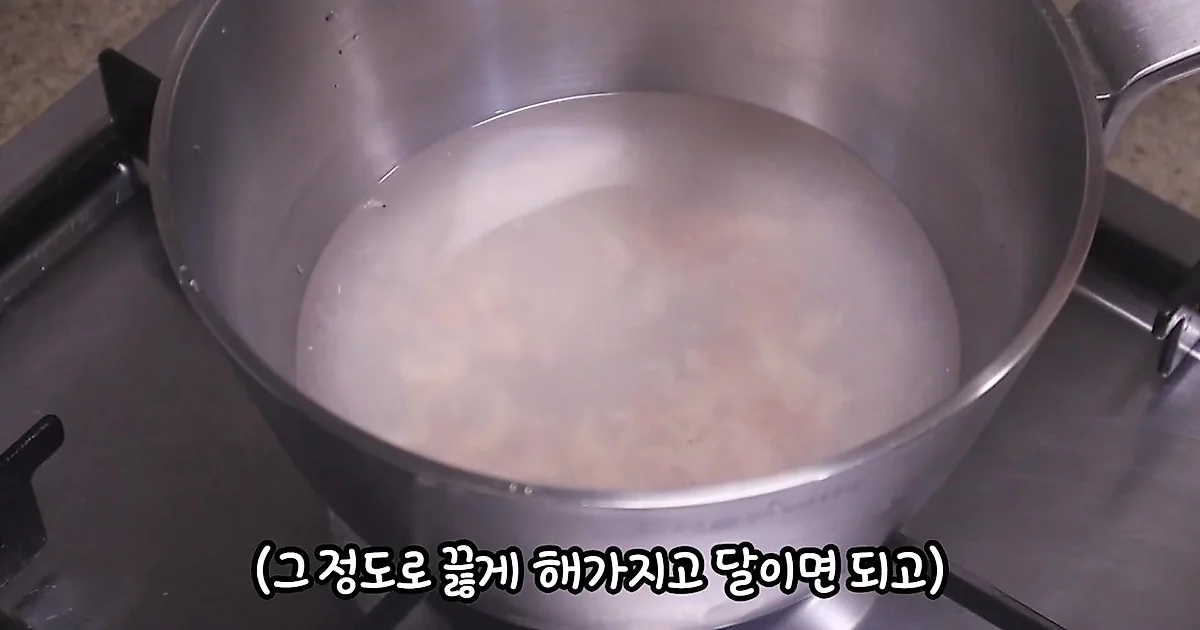
What determines the refreshing taste of the Dongchimi broth is the flour paste and the salted shrimp broth. First, to make the flour paste, boil 1 tablespoon of flour with 1 cup of water, then turn off the heat and add 1 cup of plain water to mix. When boiling the paste, it should be boiled on low heat until the surface makes a 'pong-pong-pong' sound. Separately, salted shrimp broth must be prepared. Add 1 tablespoon of salted shrimp to 1 cup of water, boil it like simmering on medium heat, and use only the liquid.
The final broth is made by combining the prepared pickled radish liquid, pear and radish juice, flour paste, and salted shrimp broth, then adding 6 cups of plain water to adjust. At this time, since 'Dongchimi must be seasoned because if it is too bland, only the broth will turn sour,' the broth should be made slightly salty using 3 tablespoons of salt, etc. Rather than putting all the salt in at once, it is better to adjust the seasoning by dissolving it little by little.
Sub-ingredients and finishing steps that maximize freshness
Sub-ingredients used to increase the completeness of Dongchimi include seaweed (cheonggak), green onions, and chili peppers. If the seaweed is washed several times and finely chopped, the refreshing taste of the broth comes alive. Green onions can be pickled together with the pickling liquid or rolled up when putting them in for a good appearance. In the case of chili peppers, as explained, 'if you have fermented chili peppers, we recommend using fermented chili peppers,' using fermented chili peppers (Cheongyang chili pepper) provides a deeper flavor. If you do not have fermented chili peppers, use fresh chili peppers, but you can insert Cheongyang chili peppers to provide spiciness. It was added, 'If you are afraid of spicy food, you can just put them in without inserting them.'
After layering the prepared seasonings and vegetables in a container, finish by pouring plenty of broth according to the advice, 'Pour the broth quite generously.' Once bubbles start to rise 'bbogeul-bbogeul' in the container, put it immediately in the refrigerator to store and enjoy it cool.



Comments 0