
Increase in ADHD Diagnoses: Likely Due to 'Interest and Sensitivity' Rather Than Pharmaceutical Conspiracy
Professor Choe Jae-cheon discusses the rising number of ADHD diagnoses…
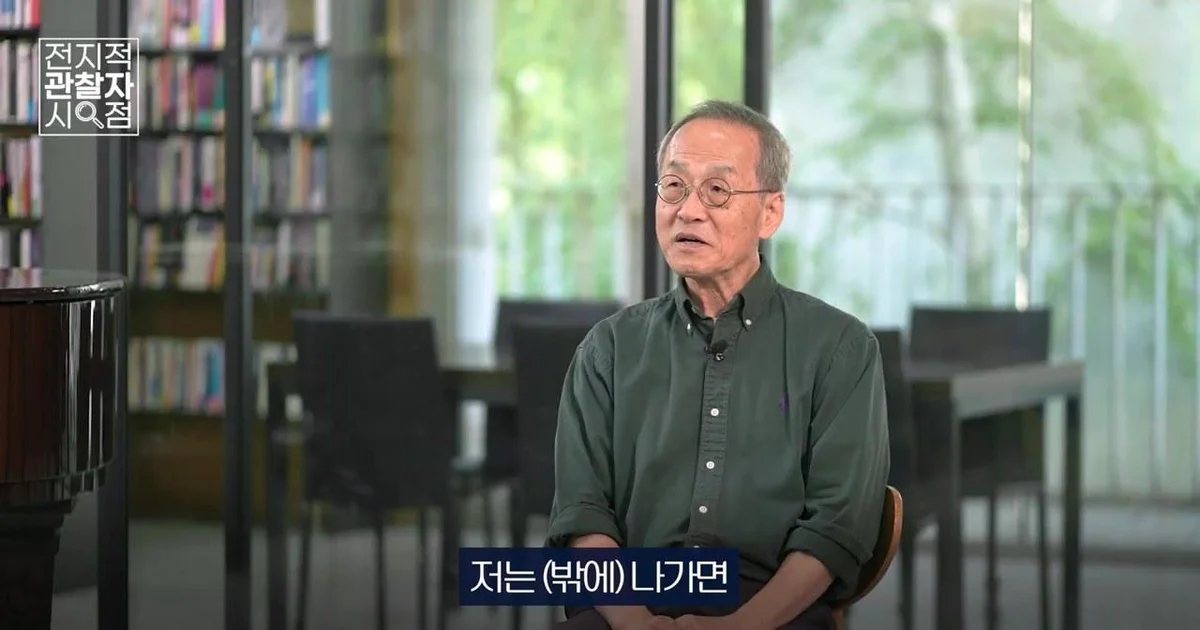
As cases of ADHD (Attention Deficit Hyperactivity Disorder) diagnoses increase recently, social interest and concern regarding this issue are growing simultaneously. Some critical views exist, questioning whether diagnostic criteria have been relaxed for the profit of pharmaceutical companies. In response, Professor Choe Jae-cheon shared in-depth views on the essence of the phenomenon of increasing ADHD diagnoses and the perspective of parents looking at children's behavior through the channel 'Choe Jae-cheon's Amazon'.
Increase in ADHD Diagnoses: A Result of Social Sensitivity and Interest
Professor Choe Jae-cheon did not view the phenomenon of increasing ADHD diagnosis cases as being due to the manipulation of pharmaceutical companies or the lowering of diagnostic standards by doctors. In the video, the participant mentioned, "It does not seem like our country's doctors have been played by pharmaceutical companies and lowered the level of judgment," and sought the cause of the increase in diagnoses in the change of social perception.
According to the participant's analysis, people have become much more sensitive to this phenomenon than in the past, and as they began to look more closely at children's behavior, the number of diagnosed cases increased as a result. In other words, the interpretation is that rather than the disease itself suddenly increasing, hidden cases are being discovered as social interest rises.
Childhood Known as 'Pencil Sharpener' and the Correlation with Major
Recalling his childhood, Professor Choe candidly shared experiences that might have placed him on the borderline of ADHD. He confessed that in his childhood, he was a child so difficult to focus that his family would go for walks with his siblings while leaving him behind. This was because he was so restless that his father would be overwhelmed if he took him along.
He shared that he even earned the nickname 'Pencil Sharpener' from his father due to a habit of constantly sharpening pencils instead of studying, as he would get distracted within five minutes of being told to study. He added that if he had lived only within the typical Korean education system and job environment, he might have remained a person who failed to achieve results due to a lack of 'sitting power' required to sit still in one place.
However, during his studies in the United States, he was able to utilize his tendencies by choosing ecology, a major that requires constantly wandering through forests and watersides. Because he chose a field that involves roaming the field rather than a discipline of sitting still, he said he could willingly immerse himself when analyzing the collected data. This is an example showing how important the harmony between an individual's tendency and the environment is.
Between Distracted Behavior and Immersion: The Need for Careful Observation by Parents
Professor Choe pointed out the contradictory attitude our society has toward 'immersion' and 'distraction.' He criticized how society praises the immersion necessary to become an expert, yet forces a child to study when they are immersed in something unrelated to studying, calling them distracted. He emphasized, "When a child told to study is immersed in something unexpected, it may actually be a signal of powerful immersion in a specific object rather than distributed concentration."
He advised that when parents judge a child's behavior, they should carefully observe what the child is fixated on and in what direction that immersion flows. Of course, there are clearly cases where medical help proven by modern medical data is needed, but he suggested that before that, there is a need to observe the child's behavior patterns in various situations.
He urged, "If they find what they like, it may appear not as an ADHD-style dispersion of concentration, but rather as a possibility to become immersed," suggesting that instead of unconditionally dismissing a child's restlessness as wrong, they should watch with an open mind.

Comments 0