
Yecheon's Seoksongnyeong, a 'Rich Tree' Owning 1,890 Pyeong of Land and Paying Taxes
A special pine tree named Seoksongnyeong in Yecheon, Gyeongsangbuk-do…
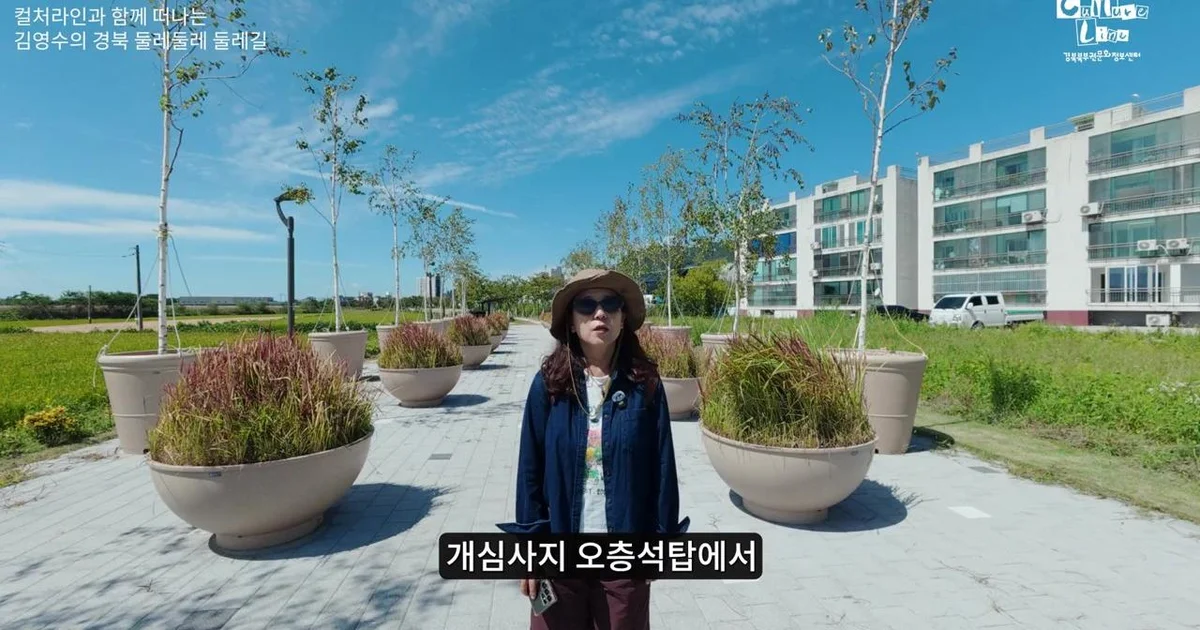
In Yecheon, Gyeongsangbuk-do, there is a special pine tree that owns land under its own name and even pays taxes. According to a video from the Kim Young-soo TV - Travel and Hiking channel, 'Seoksongnyeong', located in Cheonhyang-ri, Gamcheon-myeon, Yecheon, has a special history originating from 1927 when a person bequeathed land to the pine tree and transferred the title.
Records of 'Rich Tree' Seoksongnyeong, Owning 1,890 Pyeong of Land
Seoksongnyeong, which means a pine tree with spiritual energy in Seokpyeong Village, possesses an artistic form with massive branches spreading in all directions. The branches, which spread as wide as dozens of meters to the east, west, south, and north, show a majestic appearance as they curve windingly. Because the branches are so long and heavy, stone pillars have been erected beneath the tree to support them. The video reported that while the land inherited by Seoksongnyeong in the past was 1,191 pyeong, it has now increased to 1,890 pyeong.
The surprising fact is that this pine tree holds land under its own name and provides scholarships to village students using the revenue generated from that land. Because the pine tree even pays taxes, it is also nicknamed the 'Rich Tree' in the region. To view Seoksongnyeong, one can enter the interior after obtaining prior permission.
Five-story Stone Pagoda at Gaesimsa Temple Site and Inscriptions Holding a Thousand Years of History
The Five-story Stone Pagoda at Gaesimsa Temple Site, located about 17 minutes by car from Seoksongnyeong, is a National Treasure standing 4.3m tall, and it is said to have stood in the middle of a rice paddy in the past. This pagoda is characterized by a unique composition that places different guardian deities on each level, such as the Twelve Zodiac animals, the Eight Legions, Munbi, and Geungangnyeoksa, engraved on the base. The overall proportions also show a stable sense of balance, narrowing naturally as they rise through the five stories and forming an approximately 84-degree slope.
In particular, the decisive reason this pagoda was promoted to a National Treasure is due to the inscriptions engraved on it. According to the inscriptions, this pagoda was erected to commemorate Buddha's Birthday in 1111 (Sinhae year). Furthermore, detailed records remain stating that on February 1, 1110, sarira arrived, and to transport it, 46 units of river troops, 18 carts, and 1,000 oxen were mobilized, with a total of 10,000 people, including monks and commoners, being deployed. Near the stone pagoda, a photo zone reproducing these inscriptions is prepared, allowing visitors to check the traces of history up close.
Yecheon Travel Continuing from a Walk along the Railway Embankment Trail to the Scenic View of Seonmongdae Pavilion
Near the Five-story Stone Pagoda at Gaesimsa Temple Site, 'Yenuri Culture Park (Old Railway Embankment Trail)' has been created using the abandoned railway site of the Gyeongbuk Line. This place is used as a walking path and a barefoot walking path, and it is suitable for enjoying the autumn scenery harmonized with birch trees. In the nearby Matgoeul Culture Street, one can taste Ddarogukbap (9,000 won), a local specialty of Yecheon, at Samil Bunsik, and at the Yecheon Archery Experience Center, various archery experiences are available, such as recurve archery (6,000 won for 20 shots / 8,000 won for 30 shots), suction bows for children (5,000 won for 20 shots), and hoverballs (5,000 won for 20 shots). After the experience, one can also cook and eat instant ramen.
The final course of the trip, Seonmongdae Pavilion, boasts a beautiful scenic view along the Naeseongcheon Stream. Seonmongdae, a pavilion built in 1563 by Uam Lee Hyeon-do, is also a historical place visited by Joseon literati Ryu Seong-ryong, Kim Seong-il, and Jeong Yak-yong. In the case of Jeong Yak-yong, it is known that he visited this place due to the connection of his father serving as the magistrate of Yecheon. Walking along the pine forest path from the parking lot, Seonmongdae, which you encounter, marks the climax of the Yecheon trip, harmonizing the lush pine forest, the winding Naeseongcheon Stream, and rocky cliffs.
Comments 0