
Jangjoeun Internal Medicine Clinic Director Park Dong-gyun: "The elderly are not simply older adults"
Director Park Dong-gyun of Jangjoeun Internal Medicine Clinic explains that the elderly require a specialized medical approach due to distinct physiological…
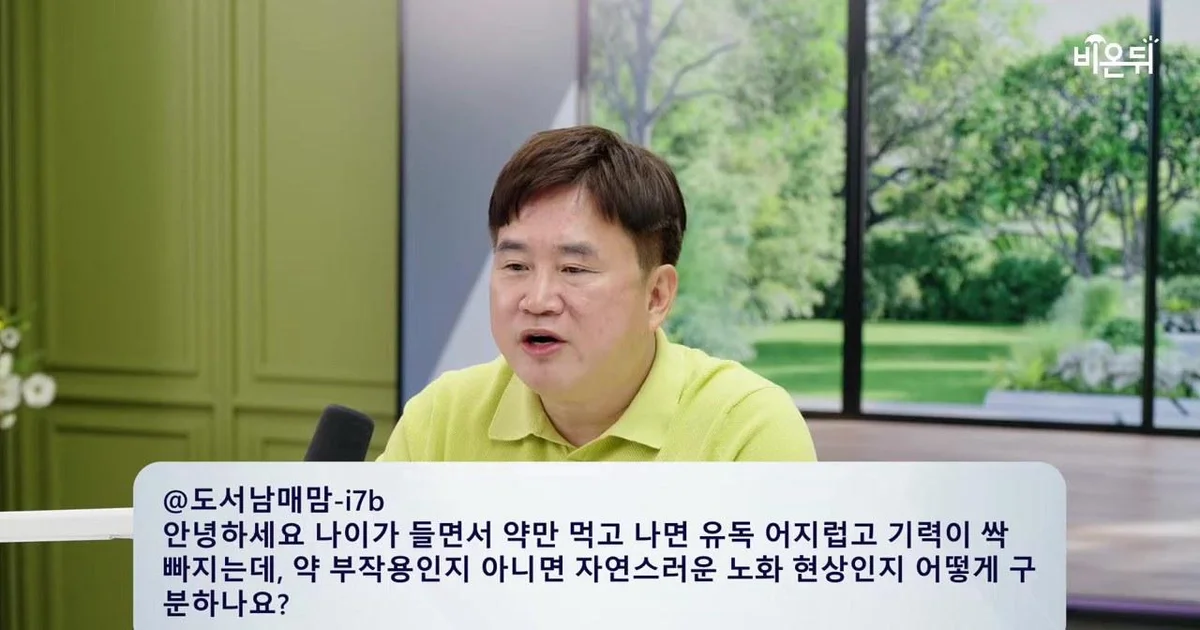
Medically, 'the elderly' is not a concept identical to simply being an older adult. This is because adults and the elderly are completely different in terms of physiological characteristics, the patterns in which diseases manifest, and the systems that respond to medication. Just as the medical community defines pediatrics as a distinct specialty by stating that children are not 'small adults,' the elderly must also be approached with specificity from the perspective of geriatric medicine.
Physical Change Stages in Old Age Varying by Age Group
From a medical perspective, old age can be divided into stages according to age. Park Dong-gyun, director of Jangjoeun Internal Medicine Clinic, who appeared in a video for 'Uihak Channel Biondwi', explains the physical changes in old age as follows.
First, 'early-stage elderly' between the ages of 65 and 74 may maintain a state similar to middle age if their health is well-managed, but generally, physical strength and muscle power gradually decrease, hearing declines, and chronic diseases begin to increase. During this period, independent activities are possible.
When entering 'middle-stage elderly' between the ages of 75 and 84, muscle mass decreases significantly, and flexibility and sense of balance decline. Most daily activities can be performed independently, but fatigue increases and the recovery speed slows down. Director Park emphasizes that maintaining muscle strength and balance through active exercise is key to preventing fall accidents so that muscle strength does not drop sharply during this period.
'Late-stage elderly' between the ages of 85 and 94 experience a distinct decline in physical functions, decreased immunity, and increased vulnerability to diseases. This is also a period when cognitive function declines. Finally, 'super-elderly' aged 95 and older often require help from others in overall daily life, such as bladder and bowel control, movement, and eating.
Mistakes Easy for Health-Confident Seniors to Make
Among seniors who manage chronic diseases well and are confident in their health, there are cases where they experience sudden health deterioration. Director Park divides health-conscious seniors into two types: the 'indifferent elderly type,' who knows their illness well, manages it themselves, and is confident in their health, and the type that does not miss even small discomforts and visits the hospital to find the cause early.
The problem arises in the case of the 'indifferent elderly type' when they fail to recognize the physical changes occurring due to aging. As aging progresses, the body's senses become dulled, and if this is misunderstood as evidence that one's health condition is good, one may face dangerous situations.
Understanding Decreased Taste and Reduced Body Temperature Regulation Ability
A representative example is the change in taste. If taste declines due to aging, the appropriate seasoning they feel may actually be very salty. For example, seaweed soup that tastes perfectly seasoned to an elderly couple may appear excessively salty to their children. While they feel the taste is appropriate, they may actually be consuming 1.5 to 2 times more sodium than usual, which can harm their health. Therefore, in old age, it is necessary to recognize that senses have become dulled and to make conscious efforts to eat blandly, such as measuring the amount of salt.
Additionally, changes in the ability to regulate body temperature must be noted. The video mentions cases of seniors who endure hot environments like saunas longer than young people to show off their health. However, this may be because the body's sensors have become dull, preventing them from immediately detecting that their body temperature has risen. If appropriate measures are not taken during this process, situations may arise where they visit the emergency room due to dehydration or low blood pressure.
Ultimately, to protect health in old age, it is necessary to go beyond simply managing diseases and to have the wisdom to objectively accept the fact that senses and physical functions change due to aging and adjust lifestyle habits accordingly.

Comments 0