
Training Column 2: Mastering Potty Training
Practical puppy potty-training guidance covers schedules, feeding, toilet location, clean pads, clear cues, praise, cleanup, and patience.
As someone who works in dog training, the concern I hear about most often is potty training. Although it is the most basic form of training, it is also the most difficult.
To potty-train a puppy, you need to understand its elimination schedule. Knowing when it usually urinates and defecates allows you to anticipate its needs and prepare in advance. Free feeding, rather than scheduled feeding, can be a major obstacle to potty training, so it is best to use scheduled feeding during training whenever possible.
Location, smell, and texture! These are the three things you need to remember first.
These three conditions greatly influence where dogs choose to relieve themselves. They tend to prefer a place slightly away from the home where they feel comfortable, a place with odors that stimulate their sensitive sense of smell, or a place whose texture differs from that of their everyday living space, such as a potty pad, carpet, bathroom mat, or blanket.
These three factors are only conditions to consider. Even dogs of the same breed have different physical abilities, so those differences must not be overlooked. Puppies that are only 2 or 3 months old do not yet have complete control of their sphincter muscles, so there is no need to push them too hard from the beginning. If you steadily help them develop awareness of the toilet area and their own living space during this period, they will be more likely to relieve themselves in the correct place by around 4 months of age.
It is commonly believed that putting some of a puppy’s urine on its potty tray helps. Leaving a very faint trace of urine on a clean potty pad may indeed be helpful. However, after the puppy urinates, replacing the pad with a clean new one is essential to potty training.
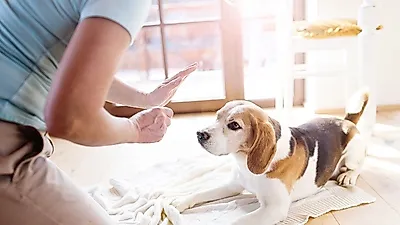
If your puppy appears ready to relieve itself after eating, guide it to the toilet area and give a signal or cue that it can easily understand. A clicker works very well for this signal. Even if the puppy relieves itself slightly off target rather than on the potty tray or in the toilet area, praise it so it learns that relieving itself is rewarding. In golf, getting the ball into a small hole in a single shot is very difficult. Before that can happen, the ball first needs to land close to the hole. When your puppy relieves itself near the potty tray or toilet area, give a clear signal, praise it, and thoroughly clean up the waste. When cleaning, avoid interacting with the puppy as much as possible. It may also help to rub clothing, socks, or other items carrying the owner’s scent over places where the puppy frequently has accidents.
With patience and enough repeated training, potty training will certainly succeed. Rather than blaming the puppy’s intelligence or abilities, consider the trainer’s role, and you should be able to work together to resolve the problem more easily.
FAM타임스 명의로 발행된 기사를 모아 제공하는 매체 공용 저자 페이지입니다.
Comments 0