
Gallstones cannot be excreted through urine by consuming water or beer
Unlike urinary stones, gallstones cannot be flushed out through urine because they follow a different biological pathway.
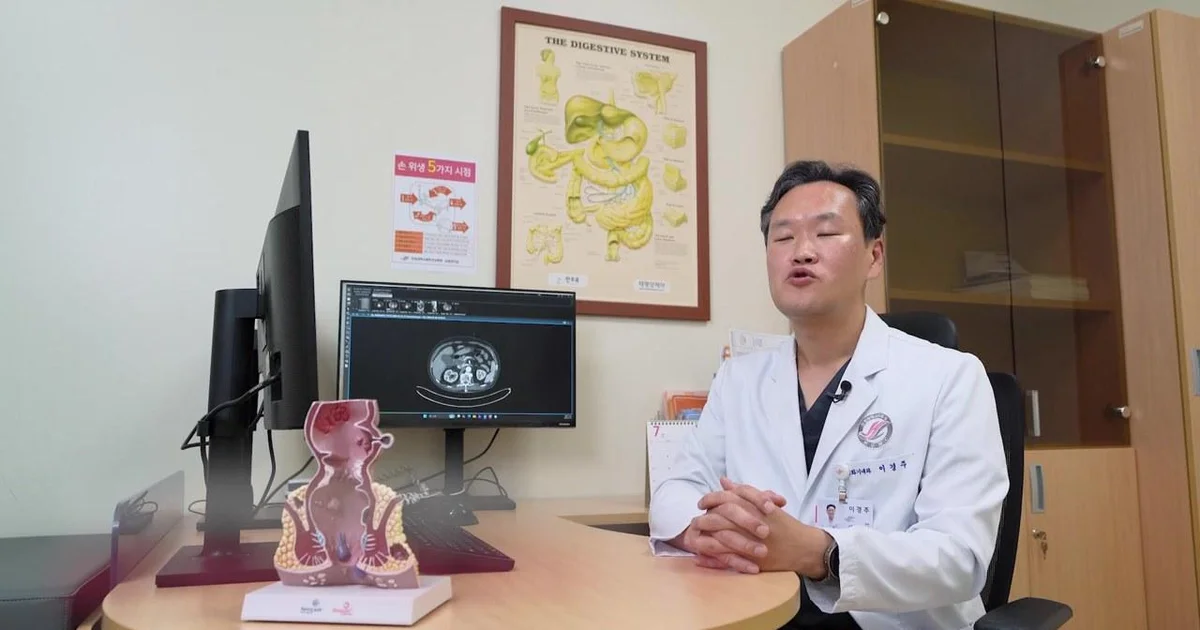
While many people try to flush out stones from their bodies by drinking plenty of water or beer, this method does not work in the case of gallstones. This is because the pathway through which gallstones form is entirely different from that of urinary stones. Professor Lee Gyeong-ju of the Department of Gastroenterology at Hallym University Dongtan Sacred Heart Hospital clarified that gallstones cannot be excreted through urine.
Fundamental differences between urinary stones and gallstones
When people hear the word 'stone,' it is easy to think of urinary stones, which are formed by waste products clumping together in the urine. For urinary stones, there is a possibility that small stones will be naturally excreted if one increases urine volume by drinking plenty of water. However, gallstones occur when bile produced in the liver hardens within the gallbladder, and the path where urine exits is completely different from the path where bile descends. Therefore, drinking a lot of water or beer cannot cause gallstones to exit the body through urine.
While medications to dissolve gallstones do exist, there are limitations, such as the stones needing to meet specific size and type conditions and requiring long-term administration. Furthermore, since there is a tendency for them to recur if the medication is stopped, surgery to remove the gallbladder is sometimes performed for patients with recurring symptoms. However, not everyone with gallbladder stones undergoes surgery. Since about 80% of patients with gallbladder stones have no specific symptoms, the principle in these cases is to monitor the progress.
3 warning signs that gallstones can lead to cancer
Most gallstones are not associated with cancer, but under certain conditions, one must be cautious and keep the possibility of cancer development in mind. Professor Lee Gyeong-ju presented three cases that have the potential to progress to cancer. First is when the size of the gallstone exceeds 3cm. Research shows that the larger the gallstone, the more it continuously irritates the gallbladder mucosa and causes repeated inflammation, which can lead to cancer. Second is 'calcified gallbladder,' where the gallbladder wall has hardened like stone. This is known to be associated with cancer development as a trace of long-standing inflammation.
The last is when the size of a gallbladder polyp exceeds 1cm. While the principle for polyps under 1cm is follow-up observation, if they exceed 1cm, the possibility of malignancy increases, and surgical consideration may be necessary. If a gallstone blocks the exit from the gallbladder, acute cholecystitis can occur, and if it gets stuck in the bile duct, acute cholangitis can occur. In particular, if a gallstone gets stuck at the point where it meets the pancreas, it leads to acute pancreatitis, and in severe cases, emergency situations such as gallbladder necrosis or peritonitis can occur. Therefore, if symptoms exist, one must consult a specialist.
Since gallstones are not naturally excreted just by waiting, regular management is necessary even if there are no specific symptoms. It is recommended to check for changes in the body through an abdominal ultrasound about once a year.



Comments 0