
Prepare a week's worth of chronic disease medication in advance for the Chuseok holiday
Professor Park Hyun-ah of Inje University Sanggye Paik Hospital provides essential advice on medication management and food safety to prevent health issues…
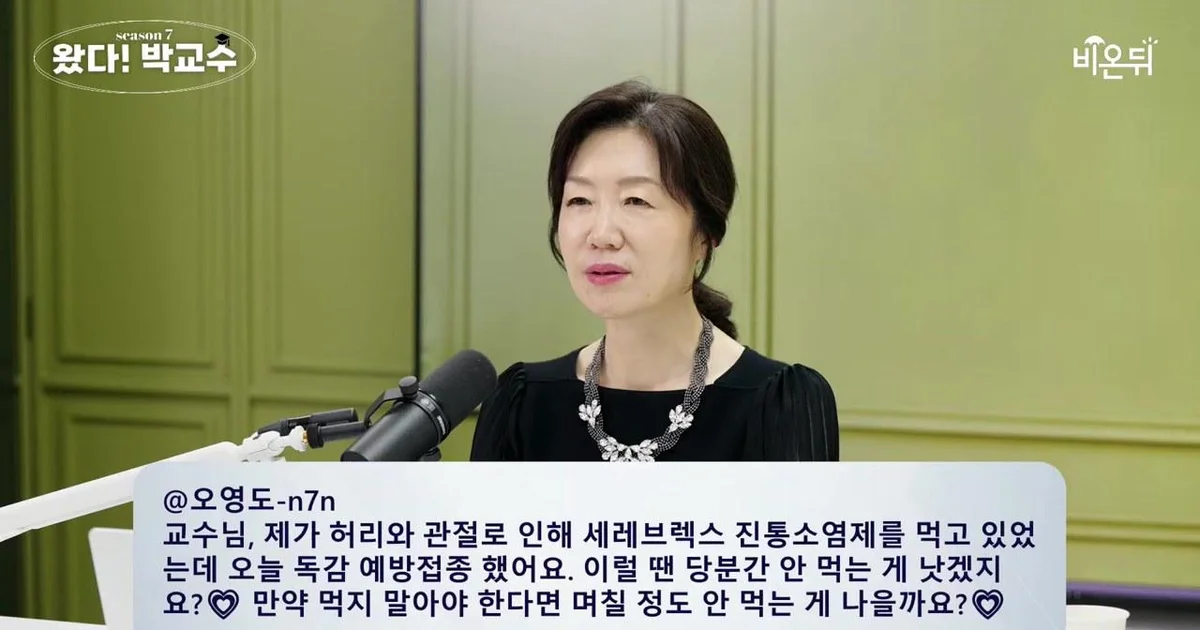
While gatherings of the whole family ahead of the joyful Chuseok holiday are happy, it is also a time that requires caution for chronic disease patients or those who must be careful with health management. This is because there are many factors that threaten health, such as greasy food, overeating, and long-distance travel. Professor Park Hyun-ah of Inje University Sanggye Paik Hospital on the Uihak Channel Biondwi live broadcast shared essential medication intake and food poisoning prevention rules that must be followed during the holiday period.
Chronic disease patients must secure a 'one-week supply' of prescription drugs
The first thing to check before the holiday begins is the remaining amount of prescription drugs usually taken. Professor Park Hyun-ah emphasizes that patients always need at least a one-week buffer of medication. This is because, during the holiday period, it may be impossible to visit a hospital due to unexpected circumstances. In particular, since the day before the holiday is often the quietest time for hospitals, it is good to secure medicine in advance by utilizing outpatient operating hours, such as Wednesday afternoons.
In particular, for patients suffering from hypertension, diabetes, heart disease, or chronic lung disease, dangerous situations can occur if they skip their medication. For hypertension patients, skipping medication can cause blood pressure to spike suddenly, and for diabetic patients receiving insulin injections, it is very important not to miss an injection. Additionally, for patients with chronic lung disease, taking medication that helps respiratory function is essential. In the case of patients taking anticoagulants or antiplatelet agents to prevent blood clots, special care is required as the anticoagulant function can disappear if new-generation anticoagulants are discontinued for even just two days, which can lead to the formation of blood clots inside the body.
'Two-Hour Rule' for preventing food poisoning and the correct grocery shopping order
During the Chuseok period, emergency room visits due to food poisoning and enteritis can appear more than twice as high as usual. Holiday food involves cooking larger quantities than usual, and in such cases, the risk of bacterial growth increases as refrigerator capacity may be insufficient or cooked food is often left at room temperature. In particular, holiday food is made in large quantities at once to accommodate guests and those returning home, and in the process of placing cooked pancakes, meat, or fish on a veranda, etc., the food can easily spoil due to exposure to high temperatures.
Professor Park presented the 'Two-Hour Rule,' which states that food should not be left at room temperature. The time food can safely endure outside the refrigerator is 2 hours, and if it is hot weather with daytime temperatures exceeding 30 degrees Celsius, this standard should be reduced to 1 hour. Furthermore, one should not feel relieved just because the taste of the food has not changed. Since the bacteria that spoil food and the bacteria that cause food poisoning are different, it is safer to boldly discard food that has exceeded a safe storage period even if the taste is okay.
The order is also important when grocery shopping. The order of items placed in a cart at the mart should be the reverse of their perishability. First, place processed foods such as canned goods or curry powder, then oils such as cooking oil, refrigerated processed foods such as cheese or milk, meat, and finally, seafood. By doing this, the time that perishable food is exposed to room temperature while returning home can be minimized. Although it may vary depending on the mart's layout, it is recommended to finish grocery shopping within 60 minutes if possible.
Do not lie down immediately after overeating... Gastroesophageal reflux disease prevention rules
It is difficult to avoid overeating during the holidays. Overeating not only causes indigestion but also causes gastroesophageal reflux disease. While the stomach is structured to withstand acid well, the esophagus is vulnerable to stomach acid. If you lie down immediately after overeating, stomach acid and food can reflux into the esophagus, causing sour reflux and pain.
To prevent this, it is important not to lie down until the food is fully digested. Since it can take about 2 hours for the younger generation and as long as 3 to 4 hours for the elderly to digest, one should develop the habit of digesting food for a sufficient amount of time before lying down. To reduce holiday stress and physical fatigue, Professor Park recommended focusing on quality rather than quantity by preparing menus that the family likes rather than preparing too much food. This is because preparing too much food increases the burden of housework such as dishwashing, and problems can also arise where the taste decreases during the process of taking out leftover food from the freezer and eating it again.

Comments 0