
Tigerleaf Treefrog from Suriname Completes 3rd Spawning... Tadpoles Hiding in Leaves Hatch into Water
Frogs imported directly from Suriname have successfully completed their third spawning cycle at a domestic amphibian specialist company.
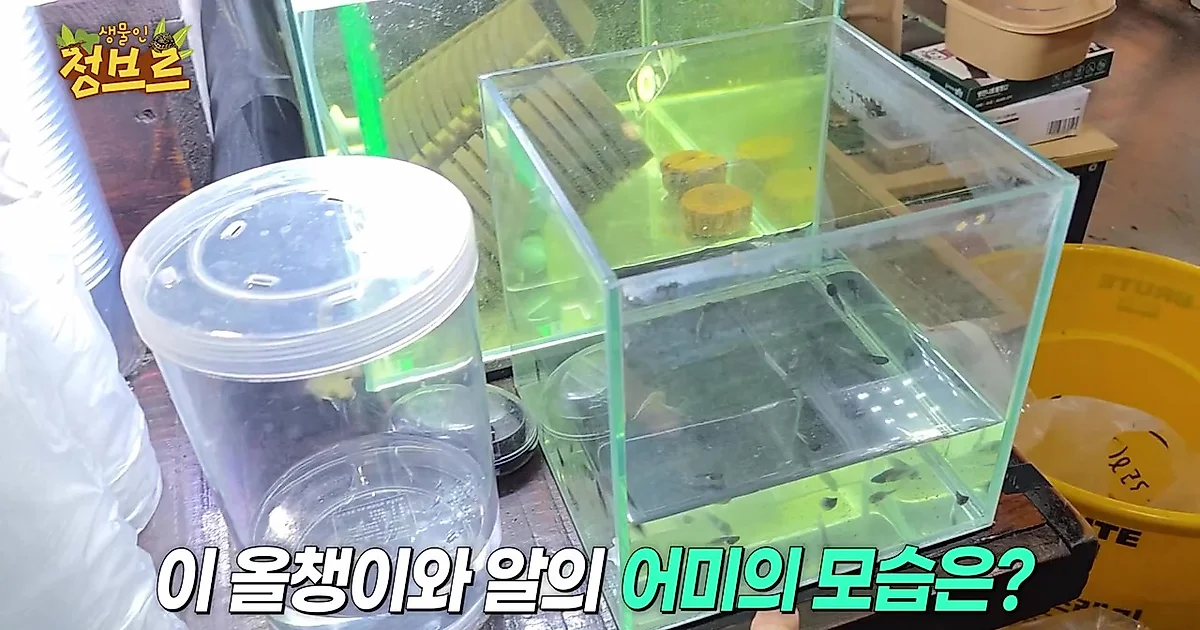
Frogs imported directly from Suriname have successfully completed their third spawning cycle at a domestic amphibian specialist company. According to a video on the YouTube channel 'Jeongbeureu', news was shared that the frogs, which Jeongbeureu had left with this company a few months ago and had momentarily forgotten about, have finished up to their third spawning. The protagonist is the Tigerleaf Treefrog, which, unlike the frogs people commonly think of, lays eggs on leaves on trees.
Laying eggs on leaves, tadpoles fall into puddles
According to the representative of the company, while general frogs often spawn in the water, treefrog species like the Tigerleaf Treefrog lay their eggs on leaves on trees. The tadpoles that hatch from the eggs fall directly into the puddles below.
In the video, the appearance of eggs from a recent spawning attached to a leaf was revealed. As it has only been 2 to 3 days since the spawning, something could be seen moving inside the eggs. While there are results showing that usually about 40 to 50 eggs are produced, the representative said they have not received that many yet. They spawn about 3 to 4 times a year, and since they have reached the 3rd time this season, they have almost finished spawning, and if they are lucky, they can receive one more round, he explained.
There were also Tigerleaf tadpoles that had already hatched. Jeongbeureu expressed amazement, noting that the tadpoles look similar to a type of catfish called Glass Catfish. A lot of seaweed powder like spirulina is used for the offspring; when sprinkled in the water, the tadpoles were seen swarming to the surface to eat. Although they are very small now, they are said to be very beautiful once they are raised well and move onto land.
Glass Frogs with transparent bellies, 'Jjin-to' and 'Jjap-to'
Various amphibians could also be met at the company. The Glass Frog is a unique frog with a transparent belly where all the organs and the heart are visible, and they usually stay active at night and sleep during the day. It is said that the method of raising them is relatively easy, requiring only the placement of plants in a vivarium. Jeongbeureu introduced that he learned from the representative that Glass Frogs hide their blood in their livers when they sleep. The baby Glass Frogs bred at the company were smaller than a thumbnail.
The Tomato Frog, as the name suggests, is a frog that resembles a tomato and inhabits Madagascar. Usually, two species are imported from Madagascar, which are colloquially called 'Jjin-to' and 'Jjap-to'. The real Tomato Frog has a redder hue, while the species that has an orange hue compared to it is called 'Jjap-to'.
Fringed Leaffrog and Red Eye Treefrog also breed
Several individuals bred at the company were also introduced. Inside the eggs of the Fringed Leaffrog, tadpoles that had hatched 3 to 4 days ago were still carrying their yolk sacs while developing tails and eyes. It is said that only about 10 to 15 hatch in one clutch. For the Red Eye Treefrog, the coloration is not brilliant at first and the eyes are not red, but as the tail disappears, the eyes turn red. In the stage of transitioning from tadpole to frog, the tail goes in and they begin to breathe air instead of breathing through gills. Red Eyes usually spawn 50 to 80 eggs, but this time about 80 came out.
The story of the Korean Bufo spinosus was also mentioned. The Bufo spinosus is a species many look for due to its unique appearance, known as the Fire Belly Toad abroad, but because import and export are impossible due to diseases like chytrid fungus, they are said to be breeding various morphs directly abroad.
Frog keeping: Temperature and humidity over cleanliness
The representative said that while there is difficulty in breeding, the act of keeping frogs itself is quite easy. While cleanliness must be maintained, it is more important to adjust the humidity and temperature well than that. The representative explained that even if they only clean about once a week, if the temperature and humidity are correct, they actually live even better.
Beginners often think that frogs must live in a humid place, but he said it is fine if the humidity is around 50–60% during the day, and if it is raised to about 90% by spraying a lot at night, they live sufficiently well. If they stay in water continuously, skin diseases or bacterial diseases can actually occur. While there are species like Dart Frogs or Glass Frogs that adapt to high humidity to some extent, it was explained that tree-dwelling frogs can actually live more healthily if there is good ventilation and slightly less humidity during the day.
The supplies are also simple. In a glass terrarium or an acrylic enclosure, one can put plants with wide leaves that are easy to grow, place one water dish, and then attach lighting such as UV lamps depending on the individual's characteristics. Dusting, which involves applying a small amount of nutritional supplements like vitamins or calcium to the food, is also necessary. However, if tap water is suddenly used for the water needed for keeping them, they can suffer from enteritis and die from diarrhea, so the water must be prepared in advance. Jeongbeureu said that if one wants to try raising special animals, he definitely recommends frogs among amphibians.



Comments 0