
Is it okay to leave cats alone during the Chuseok holiday? Precautions for absences of 2 days and 1 night or more
Pet owners are advised on how to manage cat safety and stress during the upcoming Chuseok holiday, whether they are leaving the house, hosting guests…
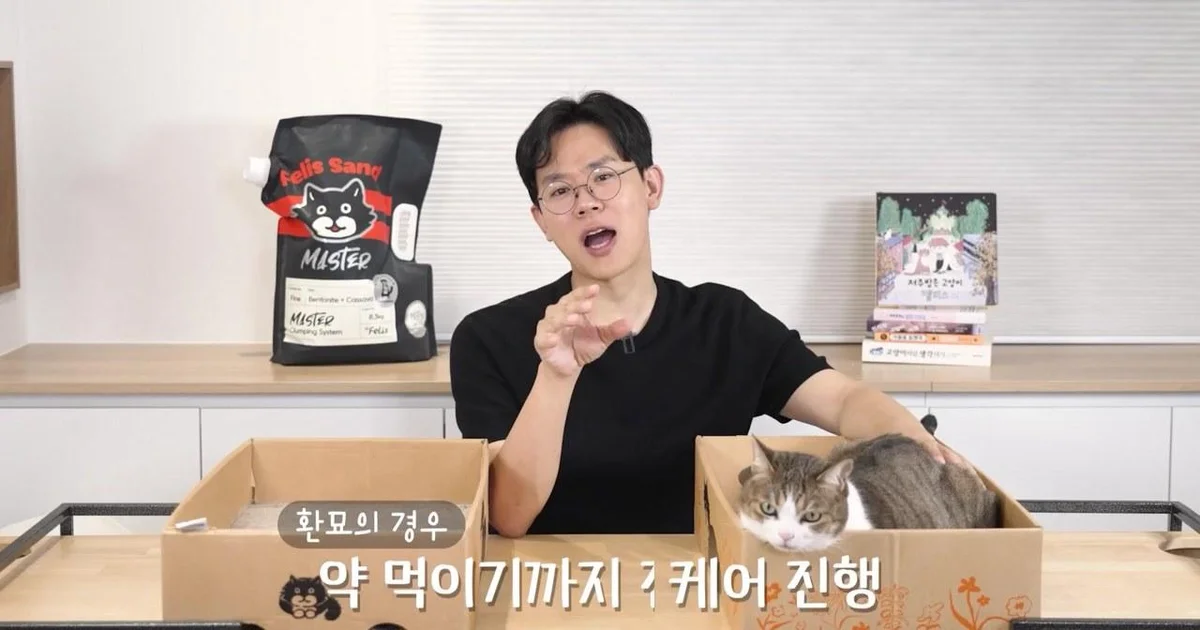
With the upcoming Chuseok holiday, many pet owners are concerned about how to manage the safety and stress of their cats when they have to leave the house or when relatives visit. According to a video from 'Meowcheol's Kitty Punch', because cats are territorial animals, meticulous environmental setup and care plans according to holiday situations are essential.
When leaving the house, 'visiting care' is recommended for absences exceeding 12 hours
Generally, it is best not to leave a cat alone for more than 12 hours. If you must leave the house for about 2 days and 1 night due to unavoidable circumstances, you should prepare more water and food than usual and set them up in multiple locations. In particular, for cats that cannot regulate their own food intake, using an automatic feeder is recommended. Before and after going out, it also helps to satisfy their hunting instincts through play.
In the video, if a gap of 2 days and 1 night or more occurs, 'visiting cat-sitting' through an acquaintance or a pet sitter was most recommended to minimize the cat's stress. This is because providing water, meals, and a litter box in a familiar environment is most comfortable for the cat. During visiting care, it should include not only replacing food and water and cleaning the litter box but also administering medication if medication is required. If you do not have an acquaintance, it is good to use a pet sitter service, or in the case of sick cats that require regular management such as checking blood glucose levels or insulin injections, it is good to consult in advance with their regular veterinary hospital to see if inpatient management is possible.
On the other hand, when choosing hoteling, the cat's personality must be considered. If a cat eats well even in an unfamiliar place and adapts quickly to people, hoteling is possible, but if it is a sensitive cat that hides even when guests arrive, hoteling may instead become a source of stress. Before hoteling, vaccinations and parasite management must be completed to prevent infectious diseases.
When guests visit the house, prepare a 'safe space' and guide them on 'catiquette'
When guests visit the house for the holiday, cats may experience great stress due to unfamiliar people and noise. In this case, the most important thing is to guide guests on basic 'catiquette'. You must ensure that they do not forcibly touch or follow the cat until the cat approaches them first, and you should caution them not to forcibly pull out a hiding cat or wake a sleeping cat. In particular, it is essential to educate young children not to chase or suddenly grab the cat.
Also, to prevent escape accidents that may occur as the front door is frequently opened and closed, you must lock the door thoroughly, and if there is an inner door, it must be closed. For sensitive cats, it is good to designate a quiet room where guests do not enter as a separate 'safe space'. This space should be equipped with all familiar items such as the food, water, litter box, hideout, and scratcher used normally. If the cat shows a severe fear response, it is also a method to consult a veterinarian and prepare anti-anxiety drugs or sedatives in advance.
Even after the guests leave, if the cat continues to hide, do not forcibly pull it out and wait until it comes out on its own. However, if decreased appetite, urinary abnormalities, vomiting, or lethargy persist, it may be a health problem beyond simple stress, so visiting a hospital should be considered.
When taking them to your hometown, check 'heart condition' and prepare for travel
If you must move to your hometown with your cat, thorough preparation on the level of moving house is required. You should pack all the litter box sand, hideouts, dishes, and food used to minimize environmental changes. To prevent motion sickness during travel, it is good to fast from 3 hours before departure, and it is recommended to administer motion sickness medicine prescribed by a hospital if necessary.
In particular, for middle-aged cats aged 7 or older, the heart condition must be checked through a health checkup before long-distance travel. This is because heart diseases that had no symptoms normally can rapidly worsen due to travel stress, causing emergency situations such as 'cardiac pulmonary edema'. In the video, citing the fact that cats are territorial animals, it was recommended not to take them if possible. If there are already other pets at the place being visited or if essential environments such as vertical space are not provided, the stress of combining animals and the environment may increase.
However, if the travel distance is short, within 1 hour, and the owner can care for the cat frequently, taking them is also a good method. In particular, for senior cats or cats with low energy, staying at home with the owner is the most stable.



Comments 0