
Dry Eye Syndrome: It Might Not Just Be a Lack of Moisture, but a Problem with the 'Meibomian Glands'
Dry eye syndrome is often caused by blocked Meibomian glands in the eyelids rather than a simple lack of tear moisture.
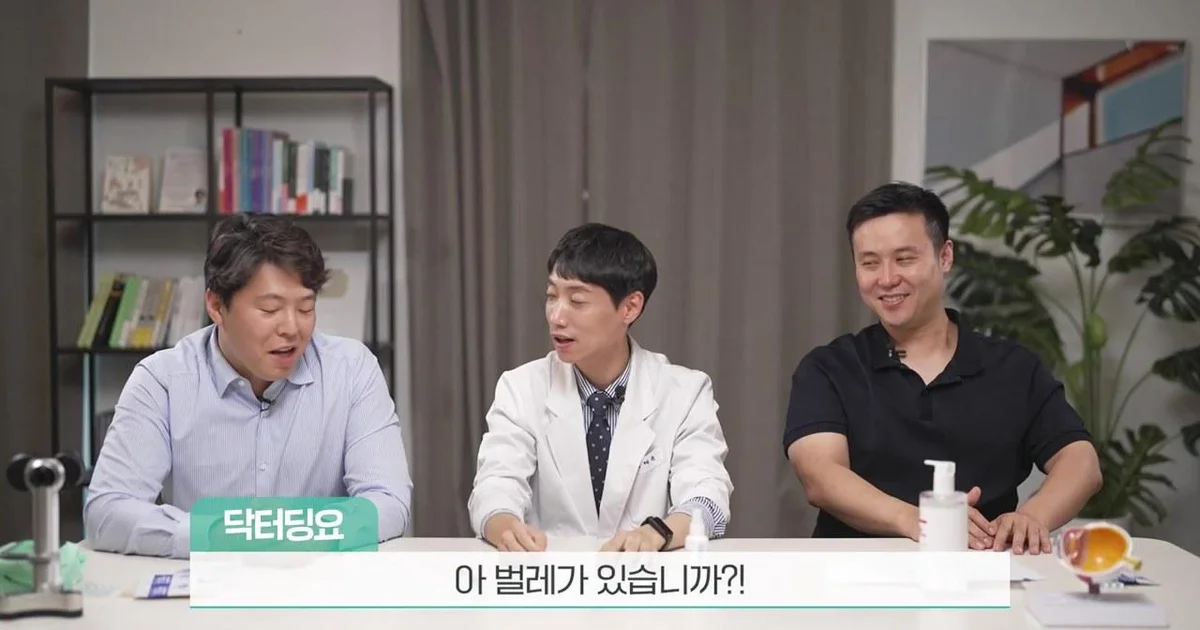
Many people suffering from dry eye syndrome tend to rely only on artificial tears, thinking it is simply a lack of moisture in the eyes. However, according to a video from the Doctor Dingyo channel, one of the main causes of dry eye syndrome is a problem with the 'Meibomian glands,' which are the oil glands located in the eyelids. This is because when the oil glands are blocked, the oil film that protects the tear layer breaks, causing moisture to evaporate rapidly.
The Hidden Cause of Dry Eye Syndrome: Meibomian Glands and Eyelid Hygiene
In the Doctor Dingyo video featuring ophthalmologists Lee Seong-hun and Han Seung-su, the correlation between dry eye syndrome and the Meibomian glands is explained in detail. The Meibomian glands are distributed throughout the eyelids and play a role in preventing the evaporation of tears by secreting clean oil. If these oil glands are blocked, the oil cannot be discharged normally, resulting in tears evaporating easily and causing dryness. The video compares this to skin dryness, explaining it through the same principle where skin becomes dry due to a lack of sebum.
There are various reasons why the Meibomian glands become blocked. A representative reason is the decline in function due to aging, and in the case of women, function may also decrease while going through menopause. Additionally, there are cases where dead skin cells accumulate on the eyelids or eyelid mites called 'Demodex' block the openings of the oil glands. Styes are also one of the diseases that occur when these oil glands are blocked by bacteria. The video states that if there is a lot of dead skin around the eyelids or a feeling of a foreign object, one might suspect mites or oil gland problems. In severe cases where mites are suspected, using a dedicated cleanser containing tea tree oil ingredients may be effective.
Home Care Methods: The Importance of Warm Compresses and Cleansing
The most recommended method that can be done at home to alleviate dry eye syndrome is a 'warm compress.' This is because heat above a certain temperature is required to melt the hardened oil in the oil glands to help with discharge. It is helpful to use warm packs sold on the market to perform a warm compress for more than 5 minutes about once a day. However, if the eyes are itchy due to allergy symptoms, a warm compress may actually worsen the itching, so it is good to judge appropriately with a cold compress depending on the symptoms and consult an ophthalmologist.
After a warm compress, eyelid cleansing should follow. It is recommended to use a dedicated eyelid cleanser, or if no cleanser is available, to lightly wipe the edges of the eyelids as if massaging them during face washing. The video advises that if you slightly flip the eyelid and wipe the area where the eyelashes grow, you can manage the openings of the oil glands more effectively. A precaution at this time is that when using artificial tears, you must drop them from a sufficient distance so that the container opening does not directly touch the eyelashes or the eyes. Care is needed because if the container touches the eye, it can cause contamination.
Caution Regarding Self-Massage: The Danger of 'Squeezing Oil'
Many people encounter massage methods through YouTube and other platforms that involve physically squeezing the Meibomian glands. However, the specialists appearing in the video do not recommend the act of squeezing the oil directly at home. This is because applying excessive pressure while the oil is in a hardened state not only causes very severe pain but also carries the risk of accidentally poking the eye, causing a scratch on the cornea or creating a scar. In fact, when the process of squeezing oil using a cotton swab was demonstrated in the video, the oil came out hard like toothpaste and was accompanied by significant pain.
In hospitals, to reduce this pain, work is carried out after sufficiently melting the oil with a warm compress, or 'IPL laser' is used to stimulate the oil gland area to help facilitate oil discharge. By utilizing the IPL laser, it is possible to induce effective oil discharge while reducing pain compared to physical squeezing. Therefore, if severe dryness or oil gland blockage is suspected, it is safer to visit an ophthalmologist for professional treatment rather than attempting excessive self-treatment.



Comments 0