
The front car stops on the highway with hazard lights on; who is responsible for the accident?
Opinions diverged among the cast of JTBC's 'Han Moonchul's Dashcam Review' regarding liability for an accident caused by a front car that stopped on a highway…
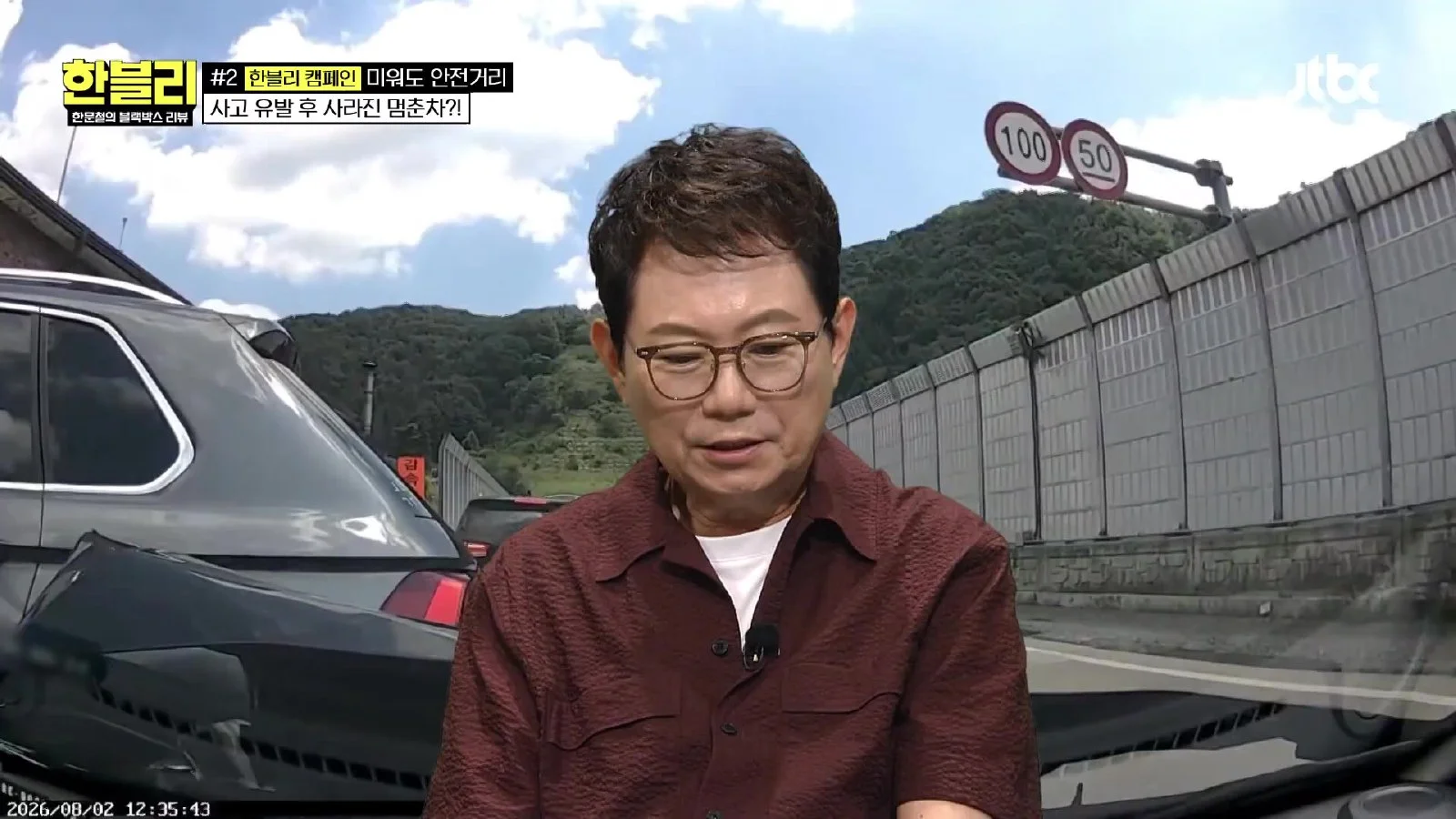
Opinions diverged among the cast regarding the liability for an accident caused when a front car suddenly stopped while driving on a highway. In the 186th episode video of JTBC's 'Han Moonchul's Dashcam Review' (hereinafter 'Han Moonchul's Dashcam Review'), an accident situation was covered where a driving vehicle was damaged due to the sudden braking of the front car.
Collision between a front car stopped with hazard lights on and the following vehicle
According to the situation in the video, the dashcam vehicle, which was driving normally, faced a sudden accident as the distance to the front car became close. It appeared that the front car was standing still with its hazard lights on to "poke" the following driver because they felt bad on the highway where cars were traveling at 100km/h. Due to this, the following dashcam vehicle collided with the front car and suffered an accident where the vehicle was completely smashed, and it was confirmed that the dashcam vehicle driver received a 2-week medical diagnosis.
A wrecker vehicle appeared at the accident scene to handle the aftermath, and the video presented urgent circumstances, such as a fight breaking out at the scene immediately after the accident. The video covered the situation where the front car stopped with its hazard lights on because it felt bad on the highway.
Debate over negligence between failure to secure safe distance and retaliatory stopping
The cast's analysis diverged regarding the cause of the accident. In the video, both the fact that the dashcam vehicle failed to keep a safe distance from the front car and the fact that the front car was standing still with its hazard lights on because it felt bad on the highway were mentioned simultaneously. Regarding this, the cast members even offered opinions that the front car was unconditionally more at fault.
In the process of calculating the negligence ratio, debates continued as the front car's negligence fluctuated between 40% and 70%. One cast member mentioned that if the safe distance from the front car had been well-maintained, the accident would not have occurred, raising the possibility of the dashcam vehicle's fault by stating that whether a safe distance was secured is the core of the accident. Meanwhile, the video mentioned the situation where the front car left the scene even after causing the accident, and it also covered the content that the insurance company could exercise the right to indemnity against the front car and the wrecker vehicle afterward.



Comments 0