
Differences between jjaktae, meoktae, hwangtae, and nogari: Are they all Alaska pollock?
Jjaktae, meoktae, and hwangtae name Alaska pollock by processing or drying state, while nogari means juvenile Alaska pollock.
jjaktae, meoktae, hwangtae, and nogari are not different types of fish, but are all names referring to Alaska pollock. However, jjaktae, meoktae, and hwangtae refer to the state of preparation or drying, while nogari refers to the growth stage of juvenile Alaska pollock. Therefore, it is easier to understand the differences by distinguishing whether one is asking about size or the method of processing.
Key differences between jjaktae, meoktae, hwangtae, and nogari
- jjaktae: Alaska pollock that has been split open, the viscera removed, salted, and then spread out to dry.
- meoktae: Dried Alaska pollock that takes on a dark color, also called heuktae.
- hwangtae: Alaska pollock dried in a winter outdoor drying rack, repeatedly freezing and thawing.
- nogari: A name for juvenile Alaska pollock. The focus is on the growth stage rather than the drying method.
The Seafood Safety Information of the National Fisheries Quality Management Service explains that the names of Alaska pollock vary depending on storage methods and growth stages. The 《Goseong-gun Alaska Pollock Fishery Folklore》 introduces jjaktae as Alaska pollock that is salted and spread out to dry flat. Alaska pollock introduction by Seafood Safety Information · 《Goseong-gun Alaska Pollock Fishery Folklore》 page 43
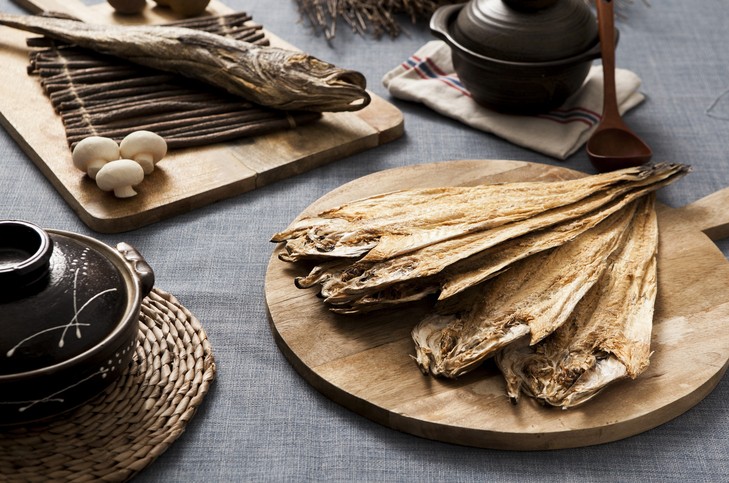
What is the difference between jjaktae and meoktae?
The name jjaktae contains the method of preparation and processing: splitting the belly, spreading it out, salting, and drying. Meoktae is a name that describes the color and drying state of the dried Alaska pollock. The Alaska pollock introduction by the National Health Insurance Service explains heuktae, or meoktae, as Alaska pollock that turns black while drying without freezing due to warm weather. Explanation of Alaska pollock names in the National Health Insurance Service webzine
Since the characteristics indicated by the names are different, it is difficult to distinguish them by only comparing size, such as saying 'jjaktae is large and meoktae is small.' Checking the preparation form of the purchased product along with the raw material and seasoning labels will help identify what you are eating.
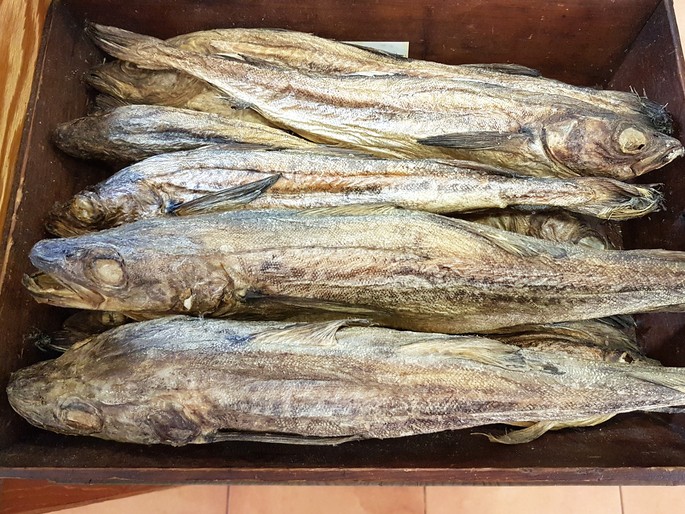
How to distinguish between meoktae, hwangtae, and bugeo?
Bugeo is a name referring to dried Alaska pollock. Hwangtae is dried by repeatedly freezing and thawing in a cold winter drying rack and is characterized by its yellow color. Meoktae refers to Alaska pollock dried to take on a black color. This is why meoktae and hwangtae should not be understood as different species.
While meoktae is familiar as a snack to be grilled and hwangtae is familiar as a soup or grilled dish, one must distinguish between the name of the food and the name of the fish. 'Meoktae-gui' (grilled meoktae) or 'hwangtae-guk' (hwangtae soup) are cooked dishes, whereas meoktae and hwangtae refer to the processing state of the Alaska pollock, which is the ingredient.
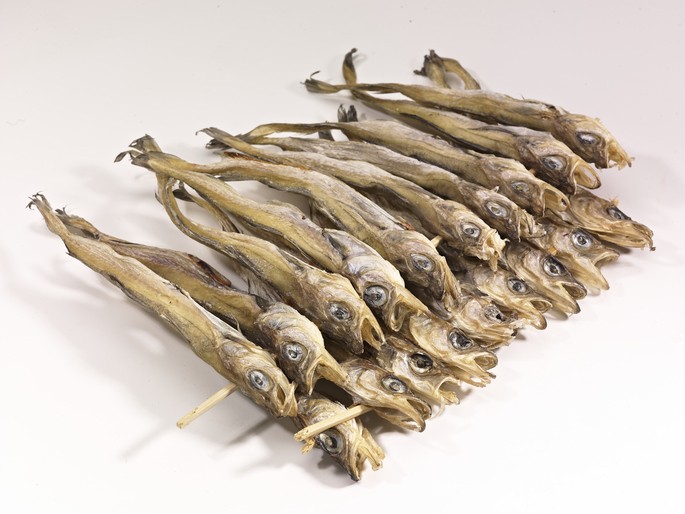
Does nogari also mean dried Alaska pollock like meoktae?
The core meaning of nogari is 'juvenile Alaska pollock.' Even if dried nogari sold in markets is familiar, the name itself does not denote a specific drying method. Therefore, when comparing meoktae and nogari, it is important to remember that you are comparing different criteria: 'how it was dried' versus 'whether it is a juvenile.'
Meanwhile, fresh Alaska pollock is called saengtae, and frozen Alaska pollock is called dongtae. If the names on menus or packaging are confusing, look at whether the term indicates the growth stage, storage state, or drying method.
[FamTimes = Juna-rae, journalist]
Editorial Update (2026-09-11): The distinction criteria for each name and reference links have been supplemented by comparing the Alaska pollock introductions from public institutions and Goseong-gun data. Health benefits without clear evidence and age/size figures for nogari have been deleted, while the original publication date is maintained.
FAM타임스 명의로 발행된 기사를 모아 제공하는 매체 공용 저자 페이지입니다.
Comments 0