
Checking Mood States Through Alpaca Ear Shapes and Tail Movements
According to a video from Talking Zoo Ppupa TV, herbivores like alpacas and sheep express their emotions through body movements…
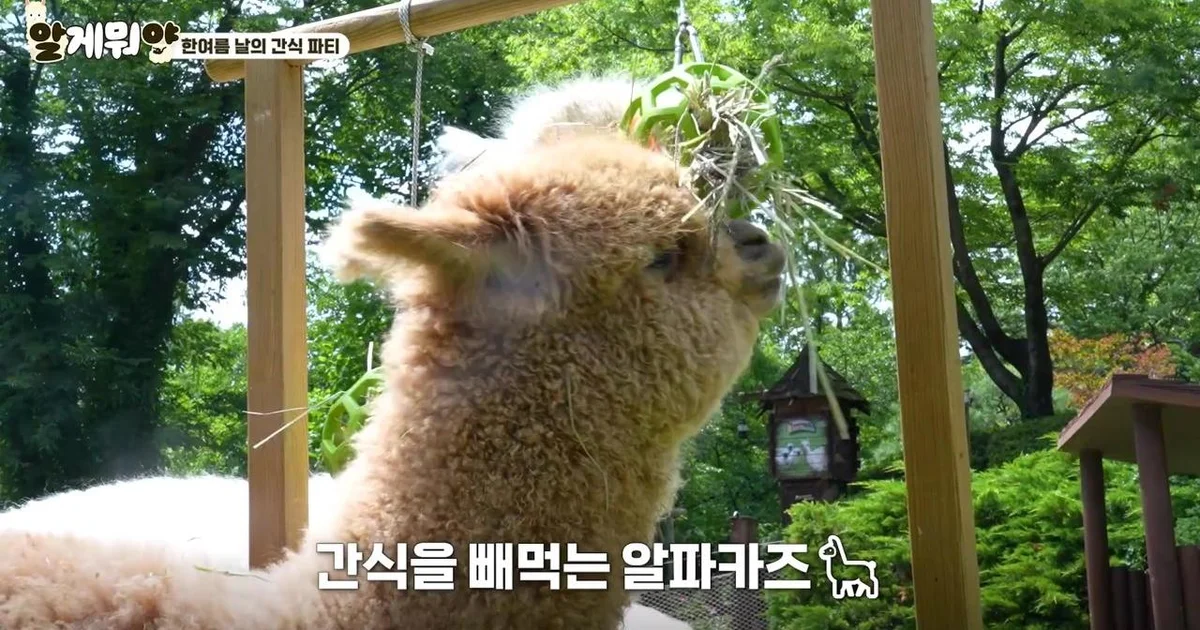
According to a video from Talking Zoo Ppupa TV, herbivores such as alpacas and sheep reveal their emotions through the movement of their body parts. In the case of alpacas, in particular, the shape of the ears and the movement of the tail serve as important indicators for identifying their mood state.
Alpaca Psychology Read Through Ear Shape and Tail
Alpacas express their current mood through the direction of their ears. If the ears are pricked upright, it means they are in a good mood, but conversely, if the ears are pulled back, it is a signal that they are in a bad mood. The video explained, through the case of Milk, a timid individual, that caution is required because they may spit when their ears are folded back. Individuals that are highly alert tend to walk with their ears folded, but their ears may open up again when they feel a sense of stability by moving away from humans.
Tail movement is also a means of emotional expression. When an alpaca expresses confidence, it may lift its tail upward. Caramel, an individual in the video, was shown lifting its tail high while chasing another friend.
The Effects of Play Mimicking Wild Environments on Brain and Muscle Development
The method of providing food for the health of animals is also important. The video introduces a play method where pellet feed is placed inside a bamboo tube, and the animals must find the food through holes. Rather than simply giving them food, an environment is created where the animals must directly push the bamboo tube or sniff to find the food.
This method creates conditions similar to a wild environment. The process in which animals search for food with their eyes, move the tube using muscles, and use their sense of smell to sniff stimulates various senses. Since making food too easy to eat can lead to boredom quickly, providing 'positive stress' that induces appropriate movement creates a synergistic effect on brain and muscle development.
Meanwhile, physical changes in sheep and alpacas can also be observed. In the case of sheep, the wool grows very rapidly; in the case of the black sheep appearing in the video, the wool grows about 30cm per year and is currently at a length of 15cm. Animals that had their wool sheared to prepare for the summer heat are growing while maintaining different hairstyles depending on the individual.


Comments 0