
[Farming Tips] Pro-tips for growing sweet potatoes in home gardens
Pungwonmi and Dahomi are suitable for home gardens, with guidance covering planting times, fertilizer, ridge preparation, and watering.
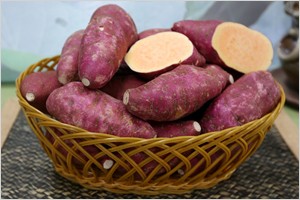
[Dog News = Reporter Lee Mi-young] The Rural Development Administration (RDA) has introduced methods for growing sweet potatoes, where nothing from the leaves to the tubers goes to waste, in home gardens.
Sweet potatoes are not difficult to cultivate, making them easy even for first-time growers. In particular, 'Pungwonmi' and 'Dahomi,' developed by the RDA, are advantageous for home gardening as they taste good and are resistant to diseases.
'Pungwonmi' and 'Dahomi' have orange flesh rich in beta-carotene. 'Pungwonmi' tubers grow large early, allowing for harvest just 100 to 110 days after planting the shoots, and the variety is also suitable for making dried sweet potato strips.
Once the sweet potato shoots are prepared, fertilizer must be applied to the garden and ridges must be formed.
For fertilizer, apply either a compound fertilizer formulated for sweet potatoes, or urea, fused phosphate fertilizer, and potassium chloride (12–31.5–26 g/㎡), along with compost (1 kg/㎡). Make ridges 20–25 cm high and 70–80 cm wide, adding a little water if the soil is dry.
The best time to plant sweet potato shoots is early to mid-May in southern regions and mid-May in central regions; care should be taken as yields may decrease if planting is delayed past late June.
To plant, place 4 to 5 nodes of the sweet potato shoot horizontally into the ground at a depth of 3 cm to 4 cm. To reduce the effort required for maintaining soil moisture and weeding, cover the area around the ridges with white plastic mulch after planting.
Initially, provide plenty of water to help the roots take hold, and if a drought persists during the growing period, water once or twice a week to maintain appropriate soil moisture.
The sweet potato stems and leaves used for seasoned side dishes grow sufficiently above ground for harvest three months after planting, but it is best to harvest them around the time the tubers are harvested to avoid affecting the yield.
FAM타임스 명의로 발행된 기사를 모아 제공하는 매체 공용 저자 페이지입니다.



Comments 0