
Forensic Dog Stories ➁ “The Murdered Widow”
A forensic dog’s scent identification helped convict a suspect in the 1999 murder of a wealthy elderly widow in the Netherlands.
In 1999, the murder of an elderly, wealthy widow in the Netherlands was solved with the help of a forensic dog.
The killer was clearly someone the murdered widow knew, because she never allowed strangers into her home. Indeed, when the widow was found murdered, there were no signs of forced entry or other traces, allowing police to quickly narrow the pool of suspects to just a few people.
The prime suspect was the executor of the widow’s recently drafted will and the head of a foundation that received her money. He had used the widow’s money for personal purposes, which she disliked. He had a key to her home and visited regularly.
The knife used in the crime was found two days later at an entrance beneath the front doorway. It appeared that someone had moved the knife while holding it with a sleeve to avoid touching it with bare hands. Although there was no blood on the knife, its form and shape closely matched the victim’s wounds. The knife was used in a scent identification procedure with a forensic dog, and the dog identified the suspect.
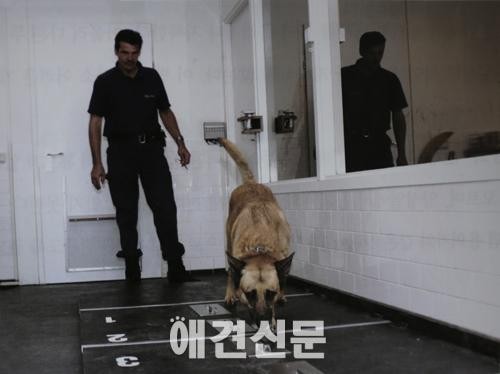
The identification procedure was conducted under a 1997 regulation. First, two control tests were used to confirm the dog’s ability and check whether it had any unusual interest in the suspect’s scent. Two further tests then compared the scent on the knife with the suspect’s scent.
The suspect admitted visiting the victim’s home that morning but continued to deny visiting later. However, records showed that shortly before the murder, he had used his mobile phone to call the widow’s home and spoken for 16 seconds. He claimed to have been 25 km away from the village, but the call was traced to a cell tower near the widow’s home. In effect, he had claimed to be somewhere he could not have been.
The suspect continued to deny everything, but experts gave detailed testimony about the mobile phone evidence and the scent identification lineup. He was convicted based on numerous pieces of evidence, including motive, the phone call, and the positive scent identification result.
(The article’s photograph and content are excerpted from “Forensic Dogs and Scent Identification,” a book about police dogs that use their exceptional sense of smell to apprehend criminals. The forensic dog series will continue in the next issue.)
Reporter Choi Joo-yeon, The Dog Newspaper 4betterworld@naver.com
FAM타임스 명의로 발행된 기사를 모아 제공하는 매체 공용 저자 페이지입니다.

Comments 0