
Chimpanzees Are Stronger Than Humans
Chimpanzee muscle fibers favor speed and dynamic strength, while human muscle fibers are better adapted for endurance.
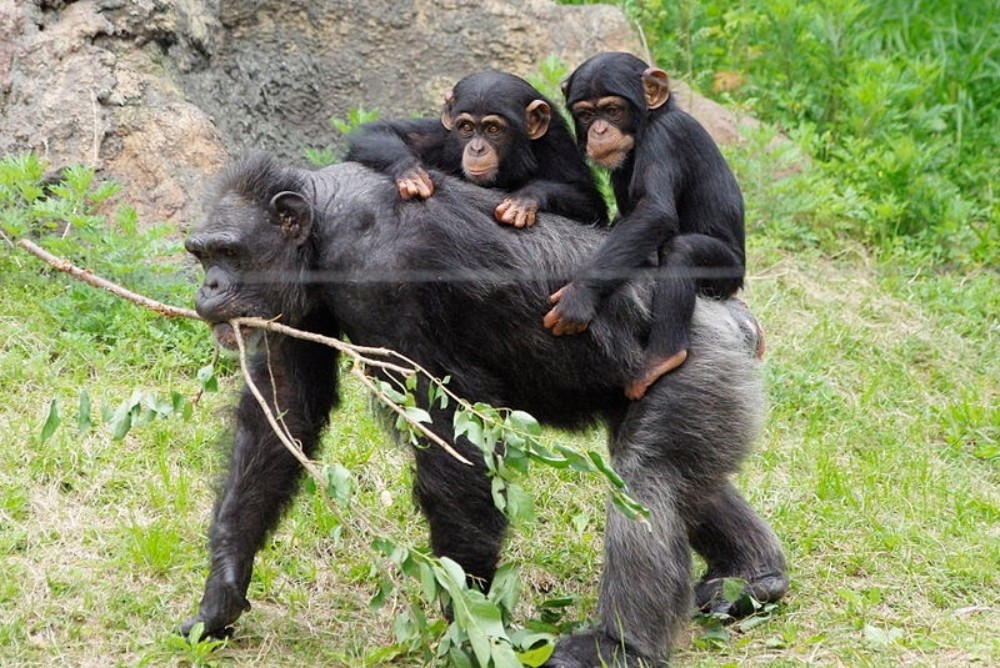
[Fam Times reporter Jennylyn Gianan] American scientists recently conducted a study comparing human strength with chimpanzee strength.
They expanded on research from the 1920s that had failed to produce a complete comparison.
Dr. Matthew O'Neill of the University of Arizona and his research team studied chimpanzee muscle fibers and the factors responsible for powerful, rapid movement.
They first examined chimpanzee strength in different regions of the body. They found that chimpanzee muscles contract faster than human muscles when generating the same force.
For the study, they froze muscle fibers from deceased chimpanzees and used them in experiments.
Dr. O'Neill compared the lengths of human and chimpanzee muscle fibers. Chimpanzee muscle fibers were considerably longer, and their distribution by muscle fiber type also differed greatly from that of humans.
Chimpanzee muscle fibers were far superior in terms of speed. Human muscle fibers, however, were far superior in terms of endurance.
In computer simulations, chimpanzees showed a dynamic strength factor of 1.35 compared with humans. Scientists explained that this strength factor developed because of chimpanzees' survival instinct to climb trees.
Although humans may have once been capable of speed and strength similar to those of chimpanzees in the distant past, their muscles changed through evolution, and our ancestors began walking upright to travel longer distances.
However, the question of why chimpanzees have such strong upper bodies remains unresolved. One theory attributes it to differences in muscle distribution.
O'Neill and the research team did not plan another study to determine the answer.
Jennylyn Gianan fam1@pcss.co.kr
FAM타임스 명의로 발행된 기사를 모아 제공하는 매체 공용 저자 페이지입니다.

Comments 0