
About Kissing Gouramis as Pet Fish
Kissing gouramis need spacious, warm, planted tanks, suitable tank mates, varied food, and close monitoring for aggression.
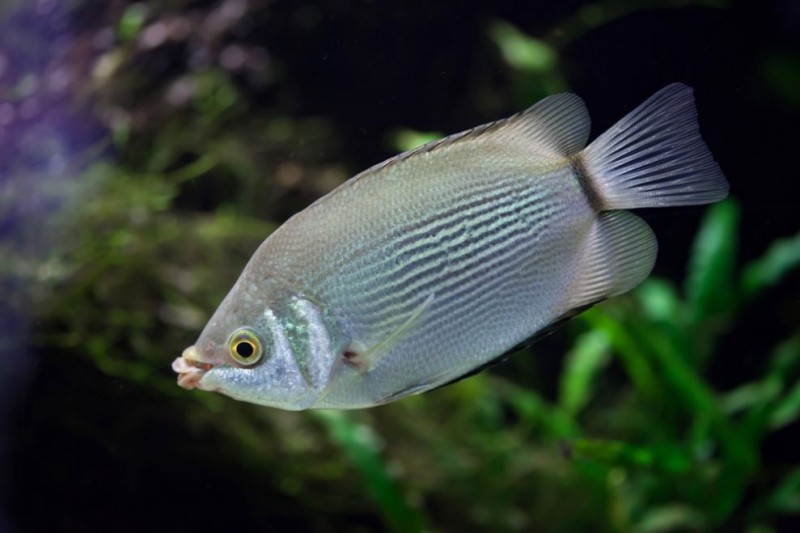
Kissing gouramis are popular tropical pet fish. They were given their name because they often appear to kiss each other, but scientists have yet to determine the purpose of this behavior. One expert suggested that it may be “a peaceful way for two males to test each other’s strength while avoiding a fight.” For example, an older fish may no longer need to fight another male to defend its territory or a female.
Kissing gouramis are native to the Indonesian island of Java. They are commonly found across Southeast Asia, including Borneo, Malaysia, Vietnam, Thailand, and Cambodia. They are farmed mainly in southern Indochina for commercial purposes, including food consumption and the aquarium trade.
Kissing gouramis come in colors including pink or apricot, silvery green, and mottled patterns. Pink or apricot-colored kissing gouramis are rarely found in the wild. This is due to leucism, a condition involving a lack of pigment cells. The green variation occurs naturally and may have black stripes on its fins and tail fin. Mottled kissing gouramis were developed for aquariums but are less popular than the pink variety. Because kissing gouramis show almost no visible differences between the sexes, males and females are difficult to distinguish. Both have oval-shaped bodies and thick lips.
If you plan to keep a kissing gourami as a pet fish, it should be housed in a separate tank because it may bully other small tropical fish. It can share a tank with fish larger than itself, but you should watch closely for fighting. Kissing gouramis may attack the sides of other fish and injure their skin.
Kissing gouramis need a spacious tank, warm water, and plenty of plants. Artificial moss or live plants can be added to the tank. Kissing gouramis are not picky eaters and will eat regular fish food, freeze-dried food, frozen food, and even live small shrimp or raw vegetables. Regularly feeding them lettuce, cooked squash, or peas can help keep them healthy.
FAM타임스 명의로 발행된 기사를 모아 제공하는 매체 공용 저자 페이지입니다.
Comments 0